Fashion Is Selling You the Wrong Layers — Here's How to Stop Falling For It
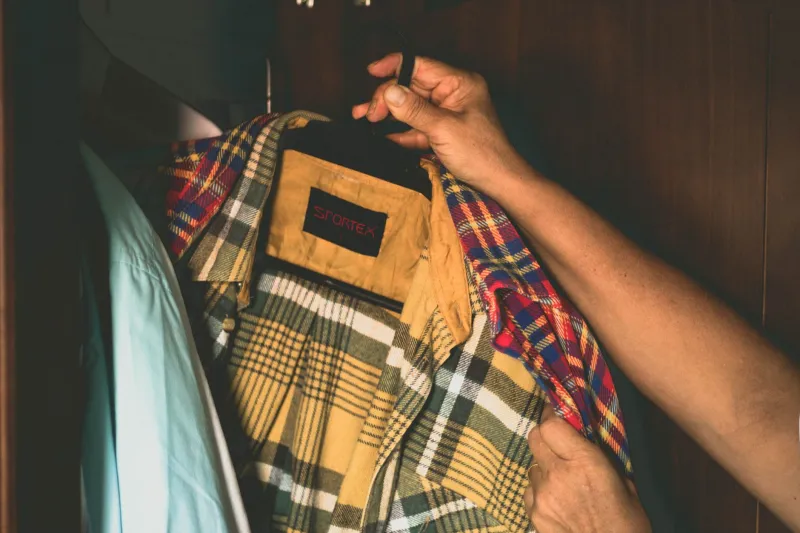
There's a specific kind of buyer's remorse that hits differently than the usual kind. It's not the regret of buying something ugly. It's the slow-burn frustration of owning a closet full of things that seemed incredibly versatile on the hanger but somehow refuse to play nicely with anything else you own. You bought them because they looked layerable. And yet, here you are, staring at a pile of cropped tees, boxy flannels, and novelty cardigans that combine into exactly zero coherent outfits.
This isn't a personal failure. It's a marketing strategy — and it's working on all of us.
The Illusion of the Versatile Piece
Fashion brands, especially at the mid-market level, have gotten extremely good at photographing items in ways that suggest maximum layering potential. A sheer mesh top gets shot over a fitted ribbed tank with a blazer thrown casually on top. An oversized denim jacket is styled with a slip dress and chunky boots. The whole look screams effortless stacking. But here's the thing: what you're buying is just the one piece. The rest of the outfit — the parts that actually make it work — you probably already own, or worse, you don't own at all.
So you buy the mesh top. You get home. You realize your ribbed tanks are all the wrong length, your blazers are cut too slim, and suddenly that one "versatile" piece needs two or three supporting players you don't have. The solution, according to your brain (and definitely according to your algorithm-fed Instagram feed), is to buy those supporting pieces too.
And just like that, you've tripled your spend on a single outfit concept.
Why Trendy Layers Are Designed to Expire
Cropped tops, oversized shirts, and statement cardigans are the holy trinity of impulse-layer purchases, and they share something important in common: they're all highly trend-dependent in their proportions. A cropped top from two seasons ago sits at a completely different hemline than the one that's trending now. An oversized shirt styled for a relaxed, tucked-half-in aesthetic doesn't translate to the more structured layering moment happening this season.
Fashion brands refresh these silhouettes constantly — not because the fundamental concept of a layering piece has changed, but because slight proportion shifts make last season's version feel off. This is intentional. It keeps you buying.
The result is what you might call an outfit bottleneck: you accumulate multiple versions of the same type of piece (five oversized flannels, three cropped knits, two drapey cardigans), none of which stack cleanly with each other, and all of which require very specific supporting pieces to work. Your wardrobe grows, but your actual outfit options don't.
The Psychology Behind the Stack-Bait Purchase
There's a cognitive bias at play here called the isolation effect — we evaluate items more positively when we see them alone than when we consider them as part of a group. A rust-colored oversized shirt looks incredible on its own rack. In the context of your actual wardrobe, it might clash with your go-to bottoms, compete with three other earth-toned tops you already own, and add exactly nothing new to your outfit rotation.
Fashion marketing leans hard into this bias. Lookbooks isolate pieces in carefully curated contexts. Influencer content shows a single "new addition" styled with a full outfit, making it seem like the piece is doing all the work when really it's just a small variable in a very controlled equation.
We also tend to overestimate how often we'll wear something new. Behavioral economists call this projection bias — we imagine our future self reaching for that novelty cardigan constantly, when in reality, our future self is going to default to the same five combinations they always use.
Introducing the Stacking Coefficient
So how do you break the cycle? The most practical tool we've found is something we're calling the stacking coefficient — a quick mental framework for evaluating any new piece before it enters your wardrobe.
Here's how it works. Before buying, ask yourself these four questions:
1. How many things I already own does this layer over? Be specific. Don't count hypothetical future pieces. Count the actual bottoms, base layers, and outerwear in your closet right now. If the honest answer is fewer than three, that's a red flag.
2. How many things I already own can layer over this? Same rule — actual pieces, not imagined ones. A piece that works both as a middle layer and a base layer is worth significantly more than one that only functions in a single position in your stack.
3. Does this fill a gap or add redundancy? Look at your current collection of similar items. If you already own two oversized flannel shirts, a third one — no matter how good the color — is redundancy, not versatility. Gaps are where you should be spending.
4. Does the proportion work with what I have? This is the one people skip most often, and it's the most important. Layering is fundamentally about proportion. A cropped piece needs to hit at the right point relative to your high-waisted pants or your longer outer layer. Try to visualize it against the specific pieces in your closet, not a generic outfit concept.
If a piece scores well on all four questions, it's genuinely adding to your layering capacity. If it struggles on two or more, you're probably buying into marketing, not building a wardrobe.
Buying Less, Stacking More
The counterintuitive truth about layering is that more pieces doesn't mean more outfits. What actually multiplies your outfit options is compatibility — pieces that work across multiple positions in a stack, across multiple other items, and across seasons without needing a full supporting cast of new purchases.
A well-chosen base layer turtleneck that works under blazers, under slip dresses, under overalls, and on its own? That's a high stacking coefficient. A trendy cropped graphic tee that only works with high-waisted wide-leg pants and a specific length of outer layer? That's a marketing win for the brand, not for your closet.
Next time you're in a dressing room or scrolling through a sale, slow down before the dopamine hit of "this would be so good layered" kicks in. Ask the four questions. Do the math. Your future self — the one standing in front of a closet full of actually wearable combinations — will thank you.
Layer smarter. That starts before you ever hit checkout.