One Closet, 120 Outfits: The Month-Long Stack Challenge You Need to Try
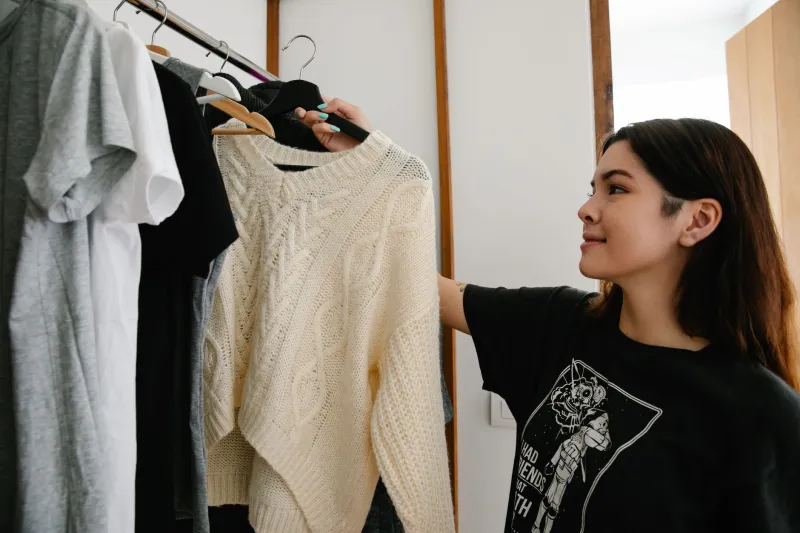
Let's be honest about something: most of us wear about 20% of our closet 80% of the time. The rest just hangs there, quietly judging us every morning while we reach for the same rotation of go-to pieces. Sound familiar?
The 30-Day Stack Challenge isn't about buying anything new. It's not a capsule wardrobe reset or a Marie Kondo moment. It's a practical, slightly obsessive exercise in learning to see your existing wardrobe differently — specifically, through the lens of strategic layering. The goal is simple: four distinct outfits per day, thirty days, one closet. That's 120 looks, zero new purchases.
Ready? Let's get into it.
Week One: The Audit (Days 1–7)
Before you can stack smarter, you need to know what you're actually working with. Most people think they know their closet. Most people are wrong.
Day 1 — The Full Pull. Take everything out. Yes, everything. Lay it across your bed, your floor, whatever surface you've got. This is your inventory moment. You're looking for what you actually own, not what you think you own.
Day 2 — Sort by Layer Role. Divide your pieces into three categories: Base Layers (fitted tees, tanks, bodysuits, slim-fit turtlenecks), Mid Layers (shirts, sweaters, lightweight jackets, cardigans), and Outer Layers (blazers, coats, oversized denim jackets, trenches). Some pieces will work in multiple categories — a button-down can be a base layer when worn open over a tee, or a mid layer when tucked in under a sweater. Note those versatile pieces with a star.
Day 3 — The Color Map. Group your pieces by color family, not by item type. You're looking for your dominant palette. Most people have more of a cohesive color story than they realize — they've just never looked at it all at once.
Day 4 — The Texture Inventory. Now sort by fabric and texture: smooth versus textured, structured versus drapey, light versus heavy. This is your texture library. The more range you have here, the more interesting your stacks will be.
Day 5 — Identify Your Core 10. From everything you've laid out, pick the ten pieces that appear most often in your mental outfit-building. These are your stack anchors — the pieces everything else revolves around. Write them down.
Day 6 — The Forgotten Pile. Look at what's left — the stuff you skipped over, the pieces you've owned for two years and barely touched. Pick three of them. These are your wildcard pieces for the month.
Day 7 — Rest and Reflect. Seriously, take a breath. Look at your notes. You now know your wardrobe better than most people ever will. Tomorrow, the fun starts.
Week Two: Learning the Stack Formula (Days 8–14)
This week is about building muscle memory around a simple framework. Every outfit you put together should follow the Base + Mid + Outer formula — but the daily prompts push you to vary how you apply it.
Day 8 — Same Base, Four Outcomes. Pick one base layer — say, a white fitted tee. Build four completely different outfits on top of it by changing only the mid and outer layers. Notice how much the base layer recedes into the background. That's the point.
Day 9 — The Proportion Stack. Today's challenge: build one oversized-on-oversized outfit without looking shapeless. The trick is anchoring it with a tucked hem, a belted waist, or a fitted base layer peeking out at the bottom.
Day 10 — Monochrome Stack. One color family, three different pieces, one outfit. This is harder than it sounds when you're working with texture variation — but that's exactly what makes it interesting.
Day 11 — The Unexpected Layer. Take one of your wildcard pieces and make it work in three different outfit contexts. A slip dress can layer over a turtleneck. A blazer can go over a hoodie. Push the piece past its obvious use.
Day 12 — The Texture Contrast Stack. Deliberately pair your smoothest fabric with your roughest in a single outfit. Silk under tweed. Cotton under leather. Let the fabrics do the talking.
Day 13 — The Work-to-Weekend Shift. Build one outfit that works in a professional context, then re-stack the same pieces into something you'd wear on a Saturday in your neighborhood. Same items, different energy.
Day 14 — Stack Review. Look back at the outfits you've built this week. Which combinations surprised you? Which pieces showed up in more outfits than expected? Update your Core 10 list if needed.
Week Three: The Daily Four (Days 15–21)
This is where the challenge gets real. Every day this week, you build four outfits before you get dressed. Not four outfits across the day — four options before you choose one.
The daily prompt structure looks like this:
- Outfit 1: Your most comfortable, low-effort stack
- Outfit 2: A version that's one step more polished
- Outfit 3: Something you'd normally talk yourself out of
- Outfit 4: Whatever you want — no rules
The goal isn't to wear all four. It's to train your brain to see multiple possibilities in the same set of pieces. Most people stop at the first workable option. Four forces you past the obvious.
Days 15–21 daily prompt rotation:
- Lead with a bottom (pants or skirt) and build up
- Lead with your outer layer and build in
- Start with a color you don't usually wear first
- Use only pieces you haven't touched in the last 30 days
- Build around shoes (yes, shoes count as an anchor)
- Repeat your favorite stack from earlier in the challenge, then improve it
- Free build — no rules, no prompts
Week Four: Stack Mastery (Days 22–30)
By now, you're not following a formula anymore — you're internalizing it. The final stretch is about refining and documenting.
Days 22–26 are about building your personal stack signatures — the two or three outfit formulas that feel most you and that you can execute quickly. Every great personal style has a few reliable moves. What are yours?
Days 27–29 are for challenging yourself with the combinations that still feel uncomfortable. The oversized blazer with the flowy midi skirt. The printed piece you never know how to style. The formal coat you only ever wear to events. Break those pieces out of their boxes.
Day 30 — The Final Count. Tally your outfits. Did you hit 120? Even if you came up short, you've built something more valuable than a number: a working knowledge of your own wardrobe that most people never develop.
What You Actually Learn From This
The point of the 30-Day Stack Challenge was never really about the number. It's about the shift in perspective that happens somewhere around day ten or eleven, when you stop seeing your closet as a collection of individual pieces and start seeing it as a system.
Once you see it that way, you stop feeling like you need more. You start feeling like you need to use what you have better. And that, honestly, is the whole philosophy behind stacking in the first place.
Layer smarter. Style further. You've got everything you need.