When Everything Changes: How a Layering Mindset Keeps Your Wardrobe Relevant
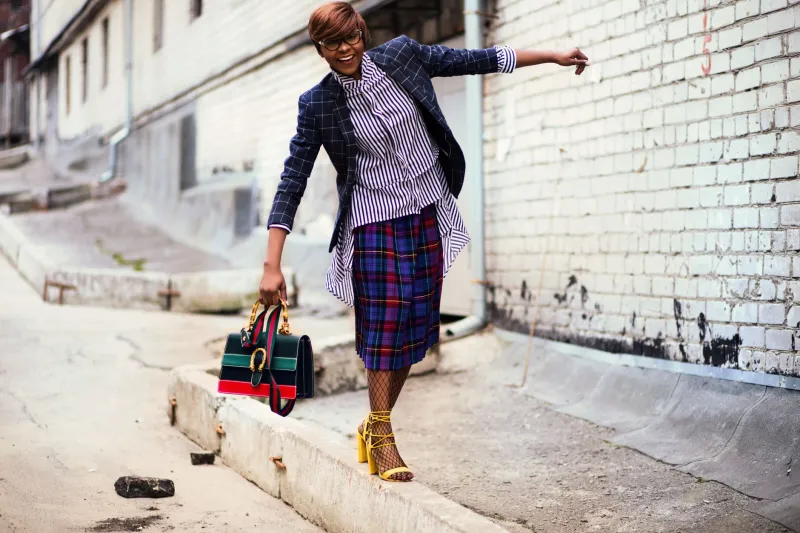
Life has a way of not asking permission before it reshapes everything. One year you're in a creative agency wearing vintage denim and interesting sneakers, and the next you're interviewing for a corporate role that requires something closer to a blazer. Or you've spent a decade in Austin and suddenly you're packing boxes for Minneapolis. Or your body has simply changed — gradually or all at once — and the clothes that used to feel like you no longer fit the way they once did.
For most people, these moments trigger a wardrobe purge. Out with the old, in with the new. A full reset. It feels decisive. It also tends to be expensive, wasteful, and — if we're being honest — rarely as satisfying as it looked on that lifestyle blog.
There's a different way through. And it starts with how you think about layering.
Layers Are Leverage
The core philosophy behind strategic stacking isn't really about fashion trends. It's about flexibility. A well-layered wardrobe doesn't depend on any single piece being perfect for any single context. It depends on combinations — and combinations are endlessly adjustable.
That's what makes a layering mindset so powerful during life transitions. You're not starting over. You're recombining.
Let's look at how that plays out in a few real-world scenarios.
Scenario One: The Career Shift
Meet Dana. She spent her late twenties working at a design studio in Brooklyn, where her wardrobe was built around loose trousers, graphic tees, oversized knits, and beat-up leather jackets. It worked perfectly for her life. Then she took a senior role at a financial services firm in Midtown.
The instinct was to go shopping. Buy suits. Start fresh. Instead, she took stock of what she already owned through a layering lens.
The oversized knits became mid-layers under structured blazers she picked up secondhand. The loose trousers, styled with a tucked silk shell and a long cardigan, read as polished rather than casual. The leather jacket stayed — worn over a crisp button-down for client-facing days when she wanted to signal creative confidence rather than corporate conformity.
She bought maybe six new pieces. The rest was recombination. The layering framework she'd already developed gave her the tools to code-switch stylistically without abandoning her identity.
Scenario Two: The Geographic Move
Climate is one of the most underestimated wardrobe disruptors. Moving from San Diego to Chicago isn't just a lifestyle shift — it's a thermal shock that can make an entire closet feel useless overnight.
But here's the thing: most San Diego wardrobes aren't actually useless in Chicago. They're just missing a few key layers.
Take Marcus, who relocated from Phoenix to the Pacific Northwest for a job in tech. His desert wardrobe was light, breathable, and almost entirely layering-unfriendly — lots of single-piece outfits, shorts, linen shirts meant to be worn alone. He thought he'd have to rebuild from scratch.
Instead, he identified the pieces that could anchor a stack — a few structured chinos, some neutral button-downs, a couple of fitted tees — and built on top of them for his new climate. A heavy-duty flannel overshirt. A quilted vest. A waterproof shell. His existing wardrobe became the foundation layer of a completely new system. He spent a fraction of what a full replacement would have cost, and he kept the pieces that genuinely reflected his taste.
Scenario Three: Body Changes and the Fit Reckoning
This one's the most personal, and arguably the most common. Bodies change. Pregnancies, aging, health shifts, weight fluctuations — they're all part of a normal human life. But the fashion industry largely pretends otherwise, offering rigid sizing that turns body changes into wardrobe crises.
Layering doesn't solve every fit challenge, but it creates more room to work with than a closet full of precisely fitted pieces.
Loose outer layers — oversized coats, drapey cardigans, relaxed blazers — are forgiving across a range of body changes. They don't need to fit perfectly because they're not meant to. Base layers can be swapped out as needed without disrupting the aesthetic of a whole look. A stack that relied on a fitted tee as its base can shift to a slightly more generous cut without the whole outfit falling apart.
This is especially relevant for women navigating perimenopause and menopause, a life stage that's finally getting more attention in fashion conversations. Layering offers practical benefits — the ability to remove a layer when a hot flash hits, the ability to add one when a chill sets in — but it also offers something more intangible: the sense that your wardrobe is working with your body rather than against it.
The Pieces Worth Holding Onto
Not everything survives a life transition, and that's fine. But before you donate the whole pile, it helps to ask a few layering-specific questions:
- Can this piece function as a base layer in a new context?
- Does it work under or over something I already own?
- Would a different combination change how it reads?
- Is the issue the piece itself, or just how I've been styling it?
You'll be surprised how often the answer changes what you keep.
Building Transition Resilience Into Your Closet Now
You don't have to be mid-transition to start thinking this way. The most transition-resilient wardrobes are built intentionally, before life forces the issue.
That means favoring pieces that layer well over pieces that only work one way. It means investing in quality base layers — the tees, tanks, and lightweight knits that anchor every stack — because those travel across contexts more easily than statement pieces. It means being a little skeptical of anything that only has one job.
Life is going to change. Your wardrobe doesn't have to scramble to keep up. If it's built for stacking, it's already built for whatever comes next.